Problem
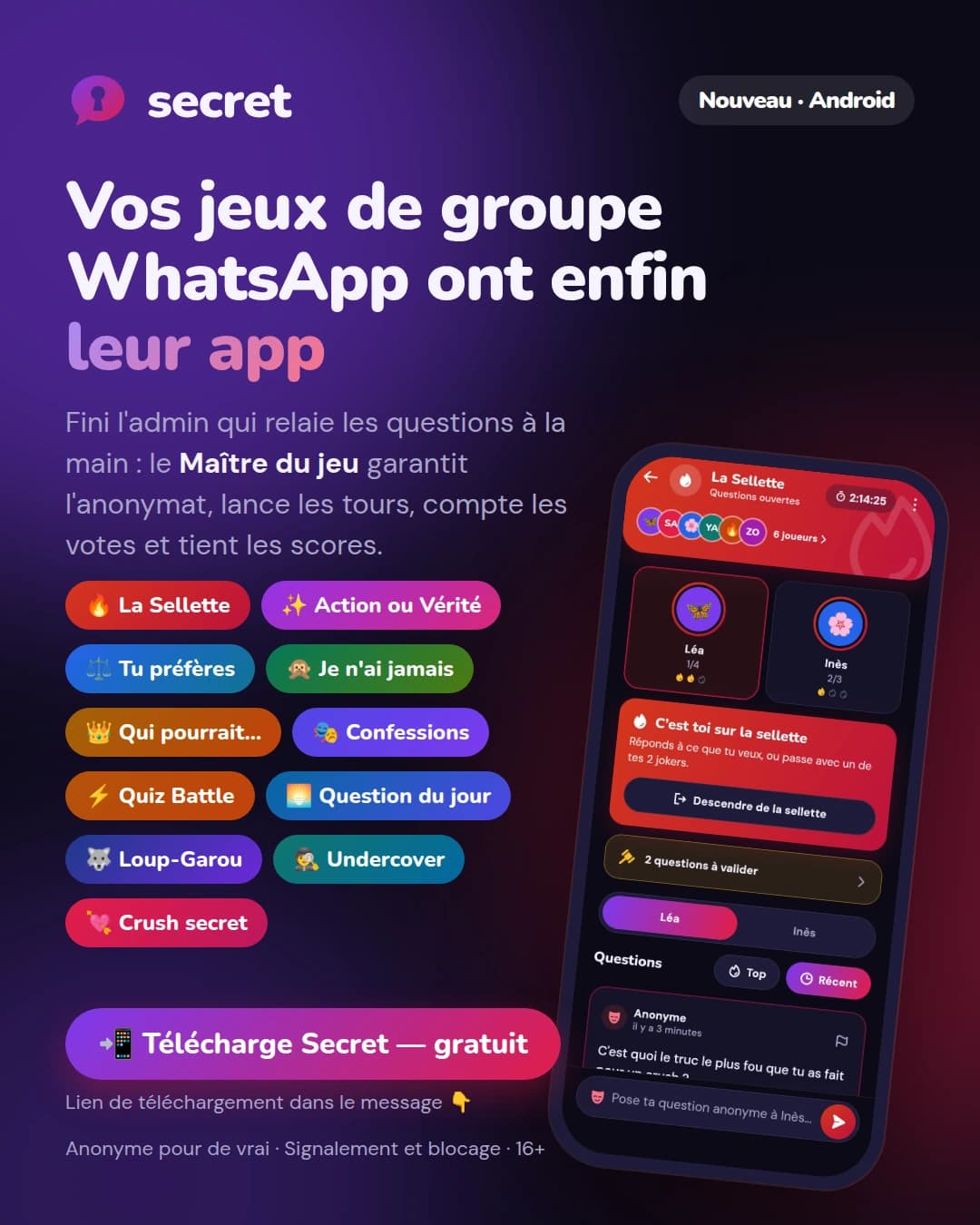
Party games between teenagers and young adults depend on an admin who relays questions, keeps score, and can see who said what — which kills both anonymity and momentum.
Solution
A Flutter app on top of a Django game engine where every game is a pluggable handler with pure-function rules, a separate pure-Dart real-time server for action games, and self-hosted LiveKit voice rooms during matches.
My role
- Solo design, architecture, and development across mobile, web, backend, and real-time server
- Server-authoritative game engine: pluggable handlers, pure-function rules verified by 10,000-game self-play runs
- Real-time Dart arena validated byte-for-byte against an independent Python reference implementation
- Spec-driven delivery (spec → plan → tasks → implementation) with API contracts written before code
- Docker and Dokploy deployment, FCM and Web Push, Google Play release
Impact
- Published on Google Play Store — verifiable via Play Store link
- 9,000+ automated tests (≈3,700 backend, ≈5,900 Dart), including anonymity-leak tests
- Designed, built, and shipped solo in about four weeks (733 commits)
Key features
- 30+ games: Hot Seat, Truth or Dare, Werewolf, Undercover, Secret Crush, Quiz (≈6,000 questions), Photo Puzzle, Checkers, Snakes, Ludo, a Bomberman-style arena game, and auto racing
- Full messaging: sticker studio, voice messages, view-once media, replies and mentions, push notifications
- Live voice rooms during games, powered by self-hosted LiveKit
- Anonymous by design: the server never serializes a submission's author or hidden information (card hands, roles)
- Real-time arena: separate Dart game server, binary protocol, client-side prediction with a clock-synced client
- Security and moderation: content filter, view-once media never written to disk, single-use tokens, SSRF-protected outbound requests, audited moderator access
- Bilingual interface (French and English) on Android and web
